

2025 Guide: Boat Insurance and Liberty Pass Coverage
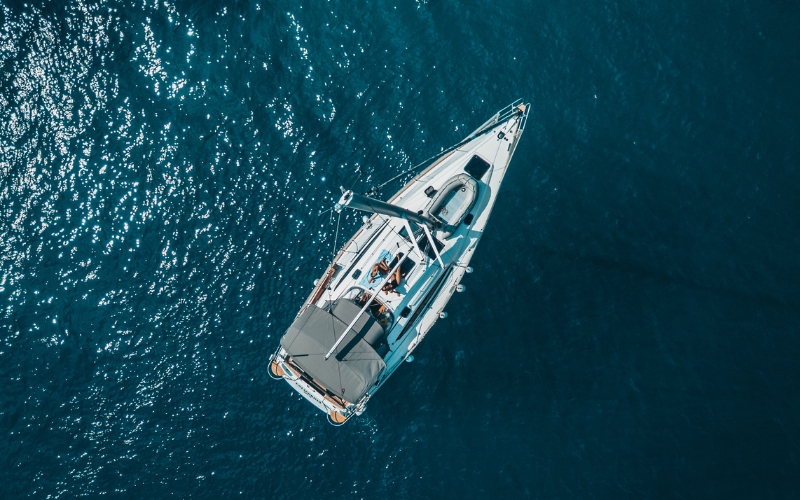
Sailing with the BDA—other people's boats— may seem appealing on paper. No purchase, no year-round maintenance, apparent freedom... But once at sea, reality can quickly catch up with enthusiasm.
What happens if there's a problem ? Engine failure, a botched maneuver, a collision at the dock, an injured passenger, or worse, an accident at sea? Who is responsible? Who pays? And above all, what insurance covers what when the boat does not belong to you?
Sailing someone else's boat without a clear framework can quickly become a source of stress. The slightest damage can lead to complex discussions, unexpected costs, and even conflicts. This lack of clarity around responsibilities and insurance is one of the major obstacles to sailing "between individuals."
It is precisely to address these issues that a new model is needed: shared boats with integrated insurance. A solution designed for peace of mind when sailing, with no ambiguity about responsibilities and clear coverage from the moment you step on board. No more wondering who is insured, how to report a claim, or what coverage applies: everything is taken care of in advance.
In this context, understanding boat insurance becomes essential, whether you are an owner, occasional user, or member of a boating club.
That is the purpose of this 2025 Guide: boat insurance and Liberty Pass coverage : to help you understand the options, avoid unpleasant surprises, and choose the simplest and most secure solution for peace of mind while boating.
Is boat insurance mandatory in France?
Unlike cars, boat insurance is not mandatory in France.
French regulations specify that insurance is only mandatory for vessels with a gross tonnage of ≥ 300, which mainly includes large yachts or commercial vessels. For the vast majority of pleasure boats (RIBs, sailboats, speedboats, open boats, etc.), there is no legal obligation to take out insurance.
But in practice, sailing without insurance would be a major mistake. Here's why:
Ports that require certification
Even if the law does not require it, many marinas require proof of insurance to allocate a berth. Without civil liability insurance, you may not be accepted in certain ports, especially in the Mediterranean.
A huge financial risk without insurance
An accident, tailgating, a collision with a pontoon, damage caused to another boat, or an injury on board can result in very high costs. Without pleasure craft insurance, everything falls on your shoulders.
A moral obligation to other users
At sea as on land, civil liability is essential protection for third parties.
In summary: not always mandatory, but always essential.
Essential boat insurance coverage
Good pleasure craft insurance includes several levels of coverage. Here are the ones you absolutely need to know about.
Civil liability for recreational boating (RC)
This is the basis of all boat insurance. It covers:
- property damage caused to another boat, a pontoon, or infrastructure,
- bodily injury caused to a third party,
- damage caused by passengers or boat accessories.
Without liability insurance, even the smallest collision can result in a five-figure bill.
Damage and breakdown coverage
They cover boat repairs in the event of:
- collision,
- capsizing,
- storm or weather event,
- fire,
- shipwreck,
- operating error.
Contracts vary greatly from one insurer to another. Some exclude older sailboats, extended sailing areas, or very powerful boats, for example.
Theft and vandalism
A very useful guarantee, especially for:
- outboard motors (a frequent target for theft),
- boats stored out of the water,
- onboard equipment.
Many insurers require approved anti-theft devices to cover an outboard motor.
Theft and vandalism are among the risks most feared by boaters, especially in busy ports or during off-peak periods. Outboard motors, onboard electronics, and certain equipment are prime targets, with often costly and time-consuming consequences, even when a boat is insured.
This is where NauticSafe boxes, found on most Liberty Pass boats,play a key role. By enabling tracking of the boat, detect abnormal events and alerting in the event of attempted theft or intrusion, they significantly enhance the security of the boat, whether it is used as a traditional property or shared.
Beyond physical protection, these devices have a real impact on claims management : a boat that is equipped and monitored is better protected, easier to locate in the event of theft, and often viewed more favorably by insurers. The result: fewer risks, less stress, and a more peaceful sailing experience.
In line with modern and responsible boating, combining solid insurance with prevention solutions such as NauticSafe means choosing peace of mind—before, during, and after sailing.
Support and troubleshooting
It's the "comfort" guarantee that many boaters underestimate... until the day it becomes indispensable.
It may include:
- sea towing,
- port troubleshooting,
- return of passengers,
- accommodation costs if necessary.
Useful optional warranties
According to insurers, we can add:
- passengers' personal belongings,
- the boat trailer,
- water sports (wakeboarding, water skiing, etc.),
- events during launching or removal from the water,
- legal protection.
How much does boat insurance cost?
The question comes up often, and the answer varies greatly.
Factors that influence price
The price is based on:
- the market value of the boat,
- his age,
- its type (sailboat, semi-rigid, outboard motorboat, yacht, etc.),
- engine power,
- navigation zones,
- the boater's experience,
- the selected warranties.
- You can request an assessment from insurers in the market.
Usual price ranges
For "traditional" pleasure boats:
- €300 to €1,500 per year for a mid-range sailboat or semi-rigid boat,
- several thousand euros for high-value boats.
The newer and more powerful the boat, the higher the insurance costs.
How can costs be reduced?
- choose a smaller navigation area,
- accept a higher deductible,
- maintain the boat regularly,
- Install certified anti-theft devices.
Traditional insurance vs. nautical subscription: two different models
Buying a boat and insuring it is different from taking out a boat subscription with insurance included, such as Liberty Pass. Here are the key differences.
Liberty Pass is a turnkey solution for consumers, including insurance.
The boat owner takes out specific insurance for their boat to cover shared use of the boat. This means that the boater benefits from the same coverage as the owner.
Administrative management
- Traditional insurance : to be managed by yourself (contract, certificates, renewals).
- Liberty Pass subscription : insurance automatically included in the subscription.
Hidden costs
- Standard insurance : deductible, damage, annual maintenance, winter storage, mooring (often the most significant expense), engine servicing, consumables, etc.
- Liberty Pass : everything is included in the monthly package, except for the deductible in the event of a claim.
A franchise buyback solution is offered to subscribers for the 12-month subscription period. This solution protects against heavy financial costs in the event of a major claim.
Which insurance does Liberty Pass use?
Insurance is included in the subscription.
The Liberty Pass includes:
- the boat,
- the port,
- the interview,
- coaching,
- and insurance.
This means that the subscriber does not have to take any steps to insure the boat.
Benefits for subscribers
- Zero administrative hassle : a single subscription, all-inclusive.
- No hidden fees : excluding any deductible.
- No need to be an owner : you can enjoy the boat without the burden of insuring or maintaining it.
- Total simplicity for sailing : you arrive, you browse, you leave.
That's exactly what Liberty Pass subscribers are looking for: freedom without complications.
Safety, best practices, and documents to have on board
Even if you are insured, certain reflexes are essential:
- have an ID,
- check the authorized navigation area,
- know how to report a claim,
- know the emergency numbers,
- Follow the daily safety checklist.
A well-prepared boat is a boat that sails smoothly.
Boat insurance is a key element of boating in 2025: even when it is not mandatory, it remains essential. It protects your boat, other users, and above all, your peace of mind.
Between traditional insurance policies, which are complex and sometimes expensive, and subscription services such as Liberty Pass, which automatically include insurance, boaters now have more flexible options that are better suited to their needs.
And this is perhaps the greatest revolution in modern boating: the freedom to sail without owning a boat, without constraints, and with insurance already included.
Want to surf without restrictions? Discover Liberty subscriptions Pass subscriptions and enjoy a boat, a berth, maintenance, and insurance, all included.
Liberty Pass
Liberty Pass offers you the best alternative to ownership and charter. Subscribe to the boat of your dreams, free from the constraints of ownership, and sail where you want, when you want, from €199/month, all inclusive.
Latest articles



Find a base