

Sailing in Brittany: a guide to finally getting out to sea
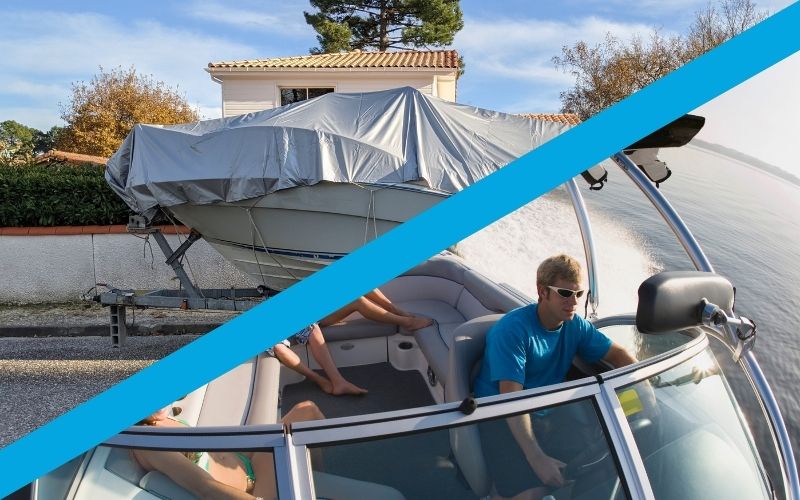
In Brittany, deciding to go sailing does not mean leaving. It means accepting, almost consciously, to engage in a series of steps that all boaters know by heart.
It often starts the same way. A window of good weather. Not exceptional, but decent. Clear skies, reasonable wind, swells forecast as "manageable." We look at each other, hesitate briefly, and someone always ends up saying:
"Right now, it would be a shame not to go."
In principle, everyone agrees. The desire is there. But between the desire and the moment when the boat is actually sailing, there are mandatory steps. There is a world of preparation, waiting, small unforeseen events, and sometimes temporary sacrifices.
Chapter 1 – The weather is nice... but not for long
When the decision is made, the weather is still favorable. That's rarely where the problem lies. What complicates things is the time it takes to turn a good idea into an enjoyable outing.
The boat is on its trailer. It must be properly hitched up, the straps checked, and everything from the last trip made sure of. We load what was missing last time, remove what is useless, and then hit the road.
Depending on the port, the journey takes thirty, sometimes forty-five minutes. On the road, we already glance at the sky. Still fine, but a little less bright than when we set off.
When we arrive at the port, it's crowded. That was to be expected. When conditions are good, everyone has the same idea. The hold is busy. We wait. We exchange a few words. We watch the others maneuver.
The launch finally begins. The trailer creaks, the boat descends slowly, the engine hesitates before starting. Meanwhile, the wind picks up a little. Nothing alarming, but enough to change the atmosphere.
And this thought crosses the minds of many: if the boat had been ready to leave immediately, the departure would not have unfolded in the same way.
Chapter 2 – The slipway: a place apart
The hold is not just a place of passage. It is a place of observation. A space where everyone becomes a spectator, sometimes a commentator.
No one really knows each other, but everyone has an experience to share. There's the one who watches from the low wall, the one who points out a detail, the one who explains how he's been doing it for years.
Nothing malicious. It's often even kind. But it adds to the passing of time. The maneuver is carried out. Slowly. Precisely. Without haste.
When the boat is in the water and the engine starts, you feel a slight sense of relief. The journey can begin. Even though much of the energy has already been consumed before leaving the port.
Chapter 3 – The engine and its little habits
An engine has its own logic, especially when it has not been running for some time, such as after winter storage.
We turn it on. It stalls... We try again. And finally it starts. Then it sputters, but it's off. Sure, but for how long?
Once launched, everything seems to be working properly. The boat is sailing smoothly, and the first few minutes are pleasant. Until an unusual noise is heard. It's not alarming, but it's stressful enough to attract attention.
We continue despite everything. More cautiously. We listen. We watch. Our gaze shifts regularly from the engine to the sky, then to the water around us.
It's not worry. We're used to staying alert.
Chapter 4 – Returning home earlier than expected
The decision to return home never comes suddenly. It gradually becomes necessary.
The wind picked up a little. The sound of the engine returned. The tide began to go out rapidly. Nothing dramatic, but enough to make us consider returning as quickly as possible.
Then someone says calmly, "Maybe we shouldn't insist."
No one objects. Because everyone has done the same calculation.
The return trip goes smoothly. The boat is taken out on time, put back on the trailer, and we hurriedly put everything back in the boat. We have to make the return trip, we are tired, and that's when we have to rinse, cover, and tidy up.
It is often at this point that the realization hits: the journey, the waiting, the preparation, the launching... for two hours of sailing.
After bringing the boat back, taking it out, strapping it down again, hitting the road to get home, parking, rinsing it off, covering it with a tarpaulin, alone... We end up on the sofa, exhausted but reassured. The mental load of sailing...
Chapter 5 – What many end up saying to themselves
Breton boaters like to fend for themselves. They like to understand, anticipate, and maintain their equipment. This independence is part of their way of sailing.
But over time, many end up coming to the same conclusion, often without really articulating it. Navigation has not become more complicated; it is the technical framework surrounding navigation that has become cumbersome.
It's not the boat that's tiring. It's everything else that goes with it. Transport, handling, storage, breakdowns and damage, the organization required for each trip. The trailer, long a symbol of freedom, sometimes becomes one step too far.
For some, it has been a way of life for generations. For others, it has become a habit. And others are adapting... They keep their boats, but look for ways to sail when they feel like it, without having to go through all the mandatory steps each time. It's not about giving up, but finding other ways to sail and rediscover the pleasure of it.
Simply sailing
Sailing in Brittany means accepting many factors. It means dealing with the weather, schedules, and material constraints. That has always been part of the game.
Many people realize, with hindsight, that they no longer seek to go on long day trips but rather seek to go out more regularly, for shorter trips, without it becoming an obstacle course every time.
Some say they have changed their approach. They now sail when the opportunity arises, without extensive preparation or relying on a series of mandatory steps. Not because they love boating any less, but rather because they enjoy sailing without the mental burden.
Among them, we now meet people who have found this balance in Brittany with Liberty Pass. Some have sold their boats, made space in their gardens (no more trailers at home), and are sleeping better... It's not a break with their habits, but a simpler way to sail when the weather and the mood are right.
By the Liberty Pass team, signed Flavie Moitessier.
Liberty Pass
Liberty Pass offers you the best alternative to ownership and charter. Subscribe to the boat of your dreams, free from the constraints of ownership, and sail where you want, when you want, from €199/month, all inclusive.
Latest articles


Find a base